Insolvency Warning Signs: Is Your Business Showing the Early Red Flags?
Running a business is tough, and sometimes the early warning signs of financial trouble are easy to miss.
Seeing one or two issues doesn’t automatically mean a business is insolvent. What it usually means is that it’s time to have a conversation.
The earlier that conversation happens, the more options there are.
Below is a practical checklist based on common warning signs regularly seen in businesses experiencing financial distress.
It draws on principles recognised by the courts and the factors considered in determining insolvency.
Financial Health
Financial reports often tell the story before anyone else.
Ask yourself:
- Are trading losses continuing month after month?
- Is working capital shrinking or negative?
- Are liquidity ratios below 1 (if monitored)?
- Are there no current budgets or cash flow forecasts?
- Do the books constantly need “cleaning up” before BAS or tax lodgements?
If financial information isn’t current or reliable, it becomes much harder to make informed decisions.
Cash Flow & Payments
Cash flow pressure is one of the earliest indicators that a business may be under stress.
Consider whether:
- BAS, PAYG or Superannuation are consistently falling behind.
- Payment arrangements with the ATO or major suppliers have become routine or are starting to default.
- Trade creditor balances continue to increase each month.
- Payments are regularly made in minimum amounts or rounded figures simply to keep creditors at bay.
- The overdraft is always fully drawn or short-term loans are being used to cover everyday expenses.
- Further equity capital can’t be raised.
- Dishonoured payments are beginning to appear.
These issues don’t necessarily mean insolvency, but they shouldn’t be ignored.
Creditors & External Pressures
Often, suppliers and financiers notice financial stress before anyone else.
Warning signs include:
- Suppliers moving to COD or requiring payment before supply.
- Statutory demands, solicitor’s letters or debt collectors becoming involved.
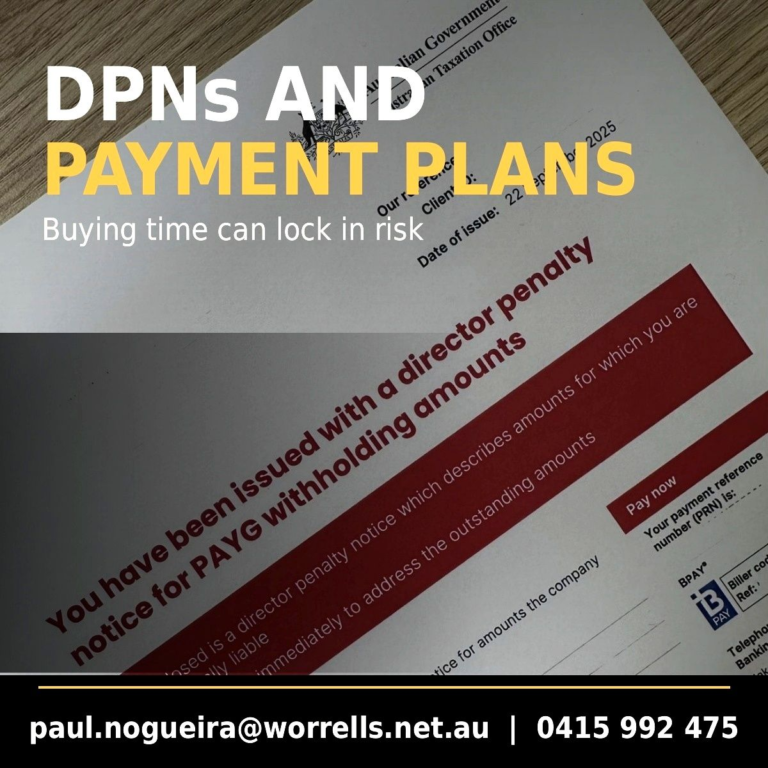
- The ATO has issued demands and Director Penalty Notices.
- Banks tightening facilities, reviewing lending arrangements or discussing covenant issues.
- Key customers slowing payments or reducing orders.
Once external confidence begins to decline, pressure can build quickly.
People & Culture
Financial stress doesn’t only appear in the numbers. It often affects the people running the business.
Watch for:
- Director or shareholder disputes.
- High staff turnover or key employees leaving.
- Management avoiding discussions about the financial position or simply hoping things improve.
- Maintenance, training or IT upgrades continually being postponed.
These issues often accompany businesses under increasing financial pressure.
Soft Signs for Advisers
Some of the strongest warning signs are behavioural.
Examples include:
- Clients becoming slow to provide information or avoiding calls.
- Meetings regularly being cancelled or postponed.
- Clients appearing stressed, defensive or distracted.
- Large personal drawings continuing while the business is experiencing cash flow pressure.
- Ignoring the ATO and lodgement obligations
These indicators don’t prove insolvency, but they often suggest it’s time to take a closer look.
What Should You Do?
If you recognise several of these warning signs, don’t ignore them.
Early action gives business owners the best opportunity to:
- Protect the business by preserving cash and available options.
- Reduce personal risk relating to guarantees, tax debts and compliance obligations.
- Stay in control by obtaining practical, confidential advice before matters escalate.
Waiting rarely creates more options.
A Conversation Doesn’t Mean the Business Is Over
One of the biggest misconceptions is that speaking with an insolvency practitioner means the business must close.
In reality, early advice often identifies options that simply aren’t available once creditors begin enforcement action and all resources have been exhausted.
Every business is different. The right solution depends on the circumstances, but the sooner the issues are identified, the greater the opportunity to achieve a better outcome.
Would you like to discuss your situation, reach out for a chat.