Creditors’ Voluntary Liquidation: How the Process Works
Learn how a liquidation works, including the appointment process, the liquidator’s role, creditor claims, investigations and distributions.
Practical articles on liquidation, including director concerns, creditor issues, investigations and the consequences of company failure. This section focuses on what happens when a company cannot continue and liquidation becomes necessary.
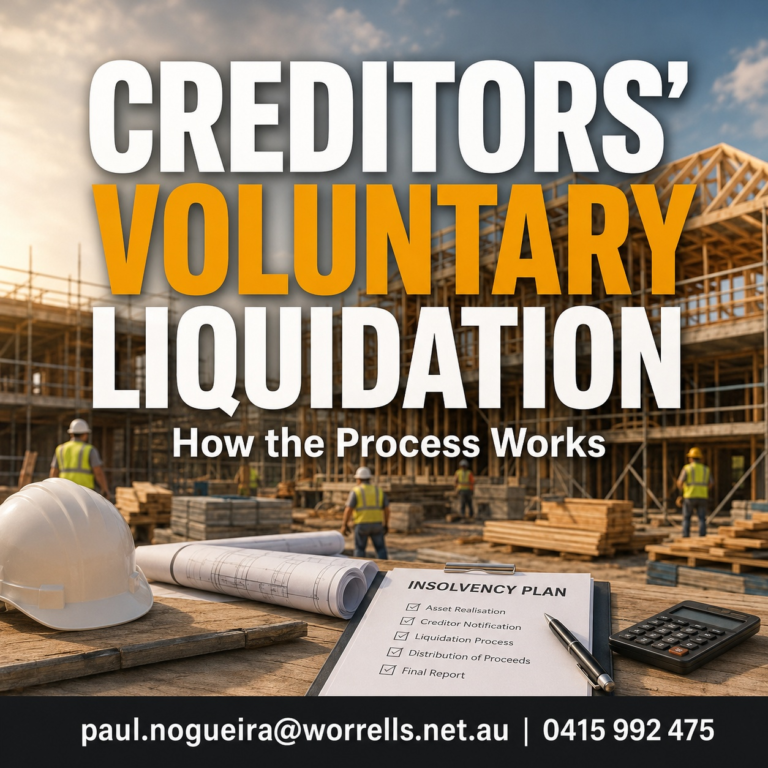
Learn how a liquidation works, including the appointment process, the liquidator’s role, creditor claims, investigations and distributions.
Learn how a members’ voluntary winding up closes a solvent company and distributes surplus assets to shareholders.
How employee entitlements are treated in liquidation and bankruptcy, including priority claims, secured creditors and FEG.

A practical explanation of what accountants and advisers may need to provide to a liquidator under section 530B.

Why debts owed by one spouse cannot usually be offset against amounts owed to another spouse in a company liquidation.
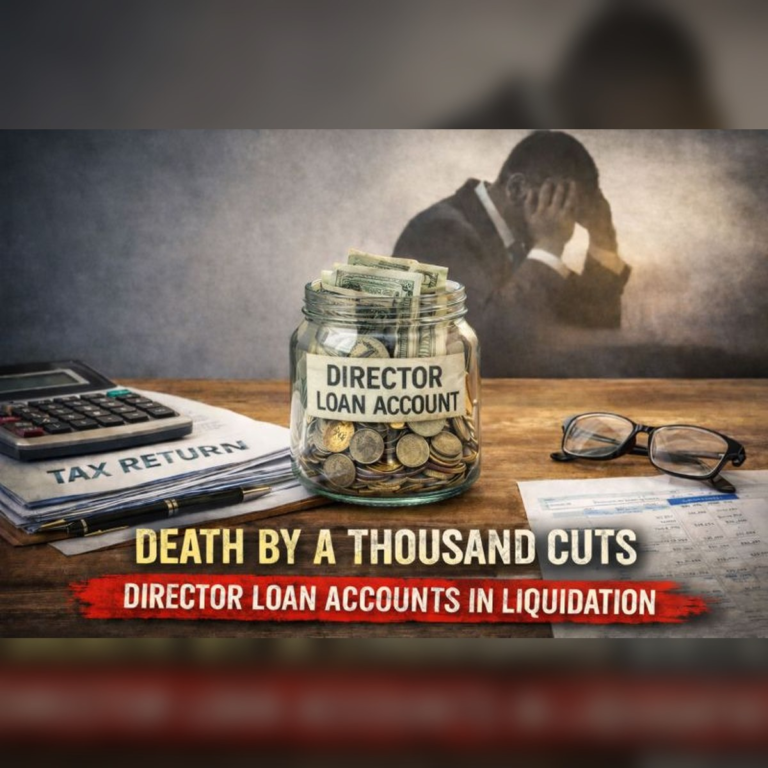
Why overdrawn director loan accounts can become a major issue when a company enters liquidation.
What public examinations are and why they may be used when records or information are not provided to a liquidator.